
RTA vs Assembled Cabinets in Germantown, MD
Compare assembly requirements alongside cabinet construction and order details.
Send my cabinet inquiry
Or call (562) 203-3232. Calls only, we do not receive text messages.
RTA and assembled cabinet buying in Germantown should begin with a written assembly scope, especially when somebody else will perform the work. Germantown Cabinet Ledger turns the selected units and their instructions into a description of completion boundaries and tasks still needing agreement. Packaging labels alone do not tell an assembler what it has agreed to do or tell a buyer what is included.
- Independent buying guidance
- Product inquiries
- Seller availability confirmed separately

Buying questions: rta and assembled cabinet buying
This guide is preparation for your independently arranged product and labor conversations. It offers no assembler, tools or installation. The owner reviews inquiries, while any sharing requires consent and an outside recipient’s actual acceptance. A question about a cabinet format does not create an agreement to assemble it or guarantee a response.
About Germantown Cabinet Ledger
Know who handles each part
Independent cabinet buying information and quote-request service. We do not manufacture, stock or install cabinets. A referral, supplier response, appointment or purchase is not guaranteed. Product availability, delivery and installation must be confirmed directly with the seller or separately engaged contractor.
Describe the deliverable before naming a format
Write what you expect after assembly: which units are completed, which fronts or accessories are fitted and which tasks remain for installation. Ask the proposed assembler to explain its actual completion boundary. Different parties may use the same word assembly while describing different tasks. The scope note should remove that ambiguity before the budget assumes a complete service.
For a hypothetical project, a product price may cover flat components while a labor offer covers only boxes. Drawers or internal accessories could still need a separate answer. Do not assume installation fills every gap. Give each responsible party the actual product schedule and ask it to identify exclusions. A completed-box proposal raises a related question: which parts arrive already fitted and which need later work? Request the seller’s product-specific information. The format distinction is useful only when tied to the offered units and their real preparation state, rather than an imagined universal boundary shared by all cabinet lines.
Obtain the instructions used to assess the work
Request the manufacturer’s instructions for the exact proposed models. Identify where different unit types have different instructions and attach them to the schedule. A demonstration for another collection is not enough to define assembly effort or components. Keep the instruction source and version with the scope note so later substitutions can be reassessed.
The supplied IKEA kitchen buying guide for Malaysia considers packaging and conditions around installation and delivery. Its geographic service context does not establish a Germantown offer. The buying inference is to gather equivalent evidence for the products you actually consider. A hypothetical assembler can then say which tasks it accepts based on the right instructions. Ask about parts, tools and missing-component questions without inventing a standard kit or labor duration. If the respondent has not seen the instructions, keep its estimate provisional and its acceptance unconfirmed. The document supports an informed discussion; it does not prove the work can be completed by an unconfirmed party.
Allocate parts checking and corrections explicitly
Before work begins, ask who checks carton completeness against the relevant parts list. Identify who contacts the seller when something is missing or incorrect, and obtain the seller’s actual reporting procedure. Do not create a universal deadline or assume an assembler’s quoted scope includes replacing defective components. Keep product discrepancy handling and assembly performance distinct.
For a hypothetical sequence, the buyer could receive cartons while the assembler reviews them later. That arrangement raises a timing question to resolve under the seller’s terms, not a remedy this guide can guarantee. Record how the responsible parties will communicate a discrepancy and who may approve a substitution. A correction proposed during work should remain documented against the affected unit. This avoids treating improvised changes as accepted product choices. It also keeps a commercial product issue from disappearing into a vague assembly total. The scope note should show each party’s confirmed role and preserve tasks nobody has yet agreed to carry.
Verify workspace and output storage separately
Name the working area for assembly, then identify a separate waiting space for finished units. Ask for package dimensions and product-handling information, then compare them with the actual route and space. Flat cartons may require less stored volume in one configuration while completed boxes require another; use the proposed products’ data rather than a blanket claim of convenience.
A hypothetical room may hold unopened packages but become congested as finished units accumulate. Another project choosing assembled products may need more room at the receiving stage. Record those conditions at the actual address, without inferring them from Germantown geography. If outside storage is contemplated, seek an actual arrangement and price. Workspace availability, receiver availability and a chosen cabinet format are separate facts. Mark their statuses separately so a product decision does not appear to confirm the labor environment. The article supplies no handling assessment; ask the people responsible for the work to confirm the conditions needed for their accepted scope.

Compare the scoped format cost estimate
For this Germantown format estimate, list the named products, proposed assembly scope and any separately priced tools, carrying or storage. Ask for an explanation when one labor offer excludes tasks another includes. Do not treat an unanswered correction or accessory question as no charge. The comparison should show known commitments and open work, not a fictional all-in amount.
Amounts are subject to change until the exact schedule, instructions and scope are settled. Obtain a written quote for products and a documented agreement for separately engaged assembly. FTC consumer guidance supports estimates with defined materials, work and price; it provides no local assembly rate. A hypothetical completed-box offer may have higher product cost while changing the labor boundary. An RTA offer may shift tasks to the buyer or a separate assembler. Neither is established as cheaper here. Normalize the actual responsibilities first, then compare their confirmed costs and whether the project can supply the capacity each option needs.
Record the format choice as an accountable agreement
After selecting an option, retain the product schedule, instruction sources, accepted assembly boundary and excluded tasks together. Confirm who approves completion and what evidence that person needs. If the product changes, reopen the relevant scope questions instead of assuming the earlier agreement carries across different units. Save the revised acknowledgment with the choice note.
For construction questions, ask about materials and hardware independently of packaging. KCMA’s cabinet standard reference supports line-specific certification questions when a seller makes that claim; it does not rank all RTA products against all assembled ones. Montgomery Planning’s Upcounty listing supplies local context, not fulfillment. Verify seller acceptance for the project and address separately. If the site receives your inquiry, state the unresolved assembly boundary for owner review. Permission and an accepting recipient are required before outside sharing. Keep the commercial agreement anchored in actual party confirmations rather than converting an informational format discussion into a promised assembly service.
Inquiry process
From buying questions to a possible supplier quote
Sending an inquiry does not reserve products or book work.
Describe the purchase
Include project ZIP, room, approximate cabinet list and preferred timing.
Clarify requirements
Identify assembly, access, measurements and any separately arranged labor.
Confirm referral availability
An inquiry can be referred only if a suitable seller accepts the location and product request.
Review seller terms
Confirm the final drawing, itemized price, payment, delivery and return terms directly before ordering.
Illustrative product choices
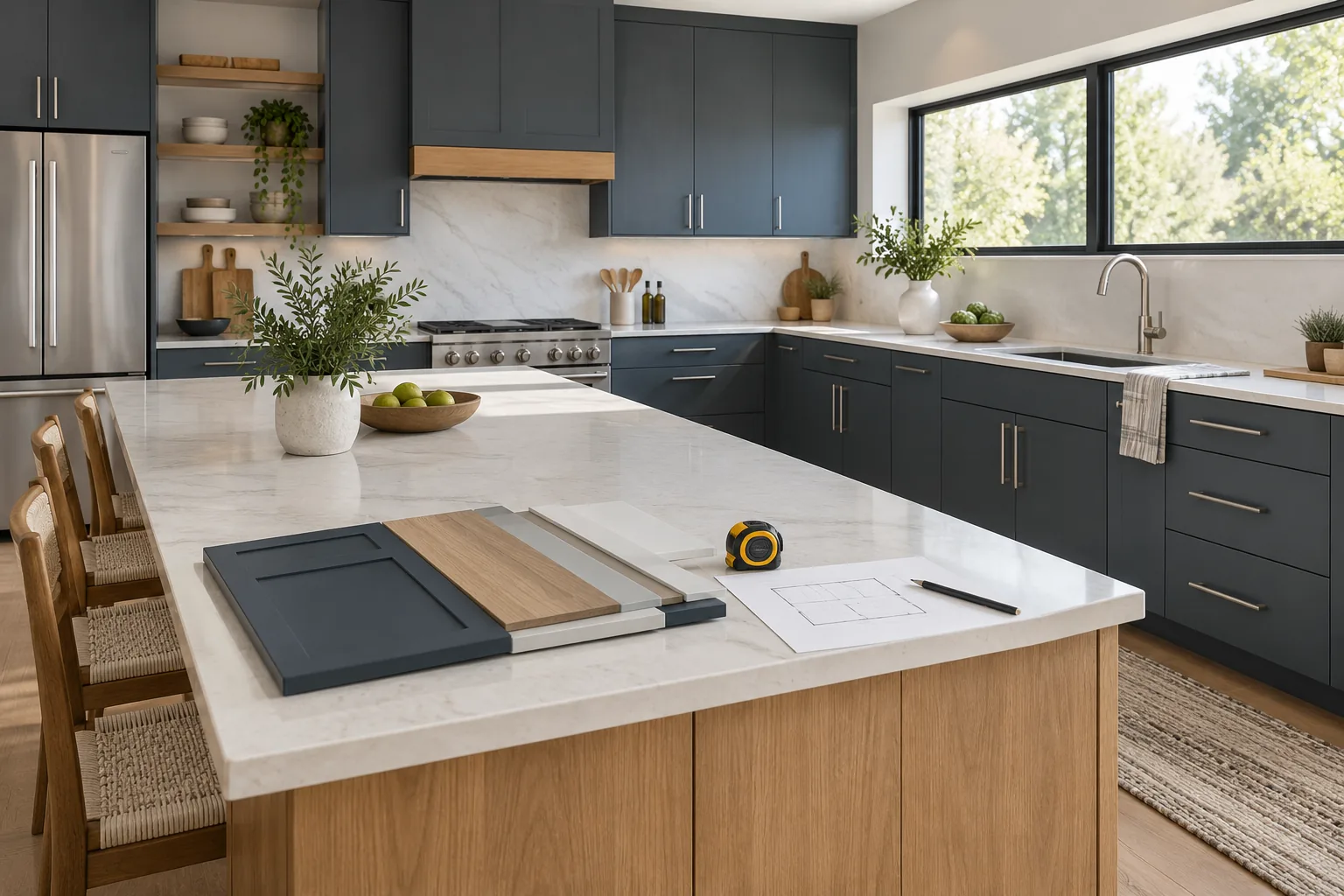
Illustrative product visualizations, not completed work, local properties or supplier facilities.
Local buying information
Local inquiry guides
Questions
RTA and Assembled Cabinet Buying: Common Questions
Does installation automatically include assembling flat units?
Do not assume the labor boundary. Give the installer or assembler the actual schedule and ask which tasks it accepts. Record excluded drawers, accessories or other preparation explicitly if they are not covered by the proposed scope.
What should a paid assembly scope identify?
Name the product units, applicable instructions, expected completion state, included tasks and exclusions. Allocate parts checking and discrepancy contact as well. The actual agreement should explain what remains for another party before installation or use.
Are missing-part corrections necessarily an assembly charge?
Obtain the relevant product and labor terms. A missing component question and an assembly task have different responsible answers. Keep them distinct, recording who reports the issue and who has agreed to perform any resulting work.
Can format labels prove construction quality?
Compare the precise product specifications and any documented certification instead. The shipping or assembly state does not identify every material, hinge or drawer feature. Keep construction evidence separate from the agreement about who performs assembly.
Talk to us about rta and assembled cabinet buying
Describe the purchase and project ZIP in Germantown. Supplier acceptance and any referral are confirmed separately; no visit or quote is booked by this form.
Calls only, we do not receive text messages.